Test Your Carol Knowledge
A rigorous examination of historical facts, forgotten verses, and the complex evolution of traditional holiday music.
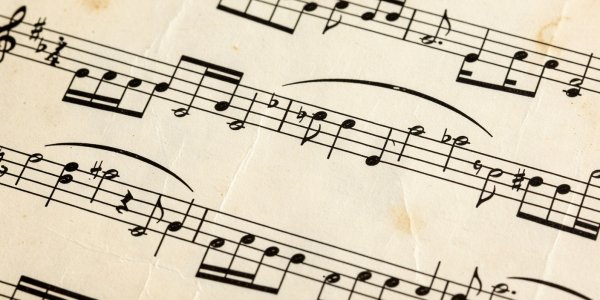
The Weight of History in Melody
Unlike modern pop hits, which are typically crystallised in a single definitive studio recording, traditional carols are living documents. They have evolved over centuries, passing through oral traditions, various translations, and countless liturgical adaptations. To test one's knowledge of carols is not simply to recall trivia; it is to engage with history. The challenges outlined here are designed for those who appreciate the provenance of a melody as much as its festive cheer.
Challenge Format 07 focuses on lyrical variations. Many carols possess verses that have been gradually discarded by contemporary performers due to length or shifting cultural tastes. For example, the original lyrics of Hark! The Herald Angels Sing, penned by Charles Wesley in 1739, began with the line "Hark how all the welkin rings, Glory to the King of Kings." It was George Whitefield who later altered it to the version we recognise today. A rigorous challenge involves reading a forgotten verse aloud and asking participants to identify the carol to which it belongs.
Origins and Translations
The geography of Christmas music is vast. Silent Night (Stille Nacht) originated in Austria in 1818, while O Come, O Come, Emmanuel traces its roots back to Latin antiphons from the 8th century. Understanding these origins adds a layer of depth to the listening experience.
Challenge Format 08 is the Origin Matching Test. The Editor provides a list of carols and a corresponding list of countries or centuries of origin. Participants must draw lines in their journals connecting the song to its correct birthplace. This format frequently surprises players, as melodies often assumed to be ancient English folk tunes may, in fact, be 19th-century American compositions, such as We Three Kings, written by John Henry Hopkins Jr. in 1857.
The Evolution of the Melody
It is a common misconception that the lyrics and the melody of a carol were always paired together. In truth, many famous lyrics were set to pre-existing folk tunes years or even decades after they were written. What Child Is This? was famously set to the traditional English tune Greensleeves. O Little Town of Bethlehem has two completely different melodies depending on geography: the tune St. Louis is standard in the United States, while the tune Forest Green is universally sung in the United Kingdom.
Challenge Format 09 exploits these melodic discrepancies. The Editor plays a recording of a carol using its less-common melody (for instance, an English choir singing O Little Town of Bethlehem for an American audience, or vice versa). Participants must identify the lyrics based solely on the unfamiliar musical arrangement. This requires a deep internalisation of the meter and phrasing of the poem, stripped of its usual melodic crutch.
Structuring the Knowledge Session
When curating a Carol Knowledge challenge, the Editor must ensure all historical facts are strictly verified. The Rhythmfox Questno journal relies on definitive sources, such as the New Oxford Book of Carols, to settle disputes. The atmosphere of this challenge should be academic yet warm—a shared uncovering of musical archaeology rather than a rigid examination.
Encourage participants to write down their thought processes. If someone guesses a German origin because the harmonic structure resembles a Bach chorale, that observation should be praised, even if the specific answer is incorrect. The journal is a record of attentive listening and logical deduction. It is through these discussions that the rich, complex tapestry of traditional holiday music is fully appreciated.